4 Blackstone Street, Wetherill Park, Sydney, NSW 2164
4 Blackstone Street, Wetherill Park, Sydney, NSW 2164
4 Blackstone Street, Wetherill Park, Sydney, NSW 2164
4 Blackstone Street, Wetherill Park, Sydney, NSW 2164
4 Blackstone Street, Wetherill Park, Sydney, NSW 2164

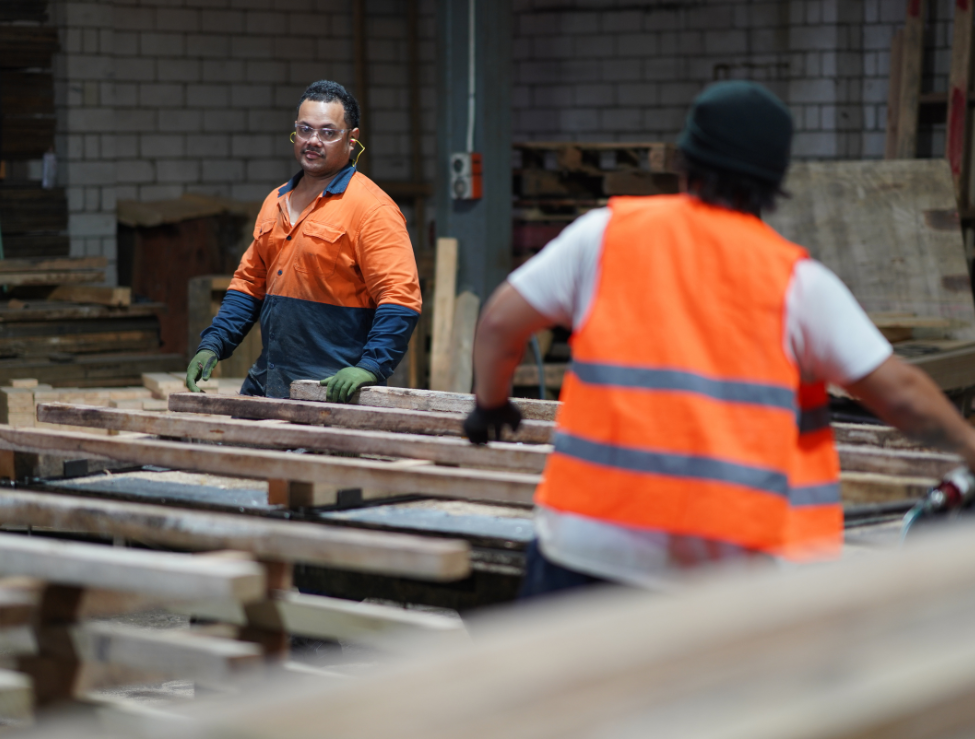
Pallets are a fundamental part of Australian supply chains, yet many businesses continue using the same pallet types without questioning whether they are actually the best fit. In practice, the choice between standard pallets and custom pallets can have a direct impact on transport efficiency, product damage, compliance, and operating costs.
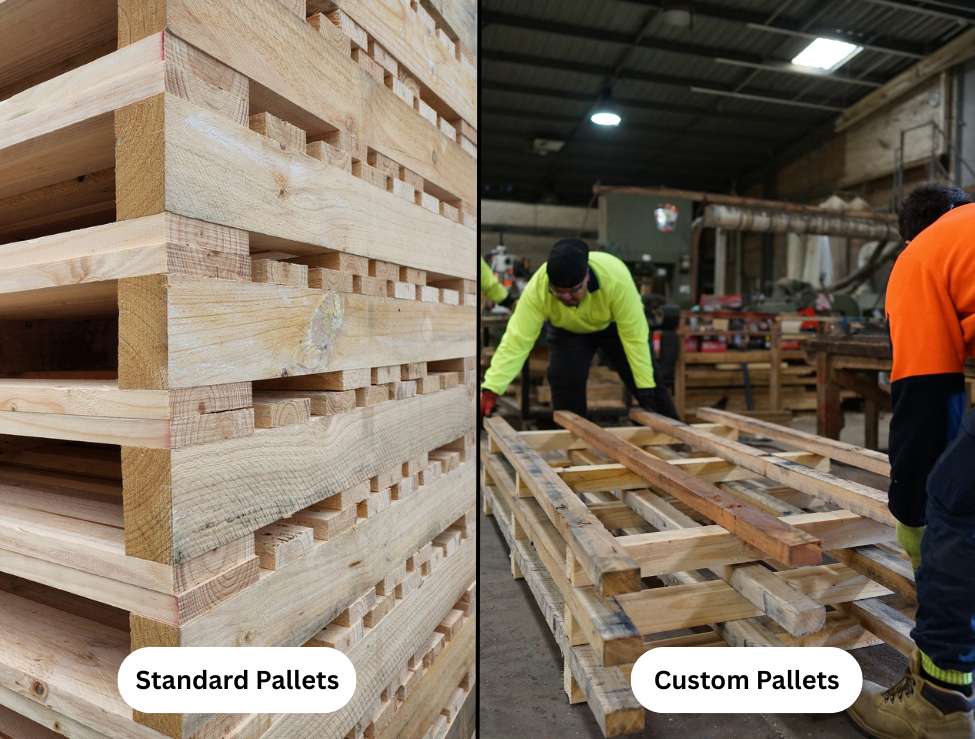
At Pace Pallet Services, we work with manufacturers, warehouses, construction firms, and logistics operators across Sydney, Wetherill Park, and regional NSW. One of the most common discussions we have with customers is whether standard pallets are sufficient, or whether a custom pallet solution would perform better in the long run.
This article clearly explains the difference between custom pallets and standard pallets in Australia, with local context and practical examples to help you make an informed decision.
If you are new to Pace Pallet Services, you can learn more about our background and manufacturing capability on our About Us page.
What Are Standard Pallets?
Standard pallets are manufactured to commonly accepted dimensions and specifications used across Australia. The most recognised size is the Australian Standard Pallet, measuring 1165mm x 1165mm.
These pallets are designed for general freight and compatibility with standard forklifts, racking systems, and transport equipment.

Pallet Pooling and Ownership
In Australia, standard pallets are most commonly used through pallet pooling programs. Under a pooling arrangement, businesses rent pallets rather than owning them, exchanging pallets within a shared network. This model is popular with FMCG, retail, and large distribution operations.
Standard pallets can also be purchased outright, which is common for businesses that operate closed-loop systems or want full control over pallet availability and condition.
Key Benefits of Standard Pallets
For businesses with simple logistics requirements, standard pallets can be a practical solution.
More information on general pallet services can be found on our Home page.
What Are Custom Pallets?
Custom pallets are designed and manufactured specifically to suit a particular product, load type, or handling requirement. Instead of fitting your product to a pallet, the pallet is built around your product.
At Pace Pallet Services, custom pallets are manufactured in-house and tailored to factors such as weight, dimensions, stacking method, forklift access, and transport conditions. You can explore this further on our Custom Pallets page.
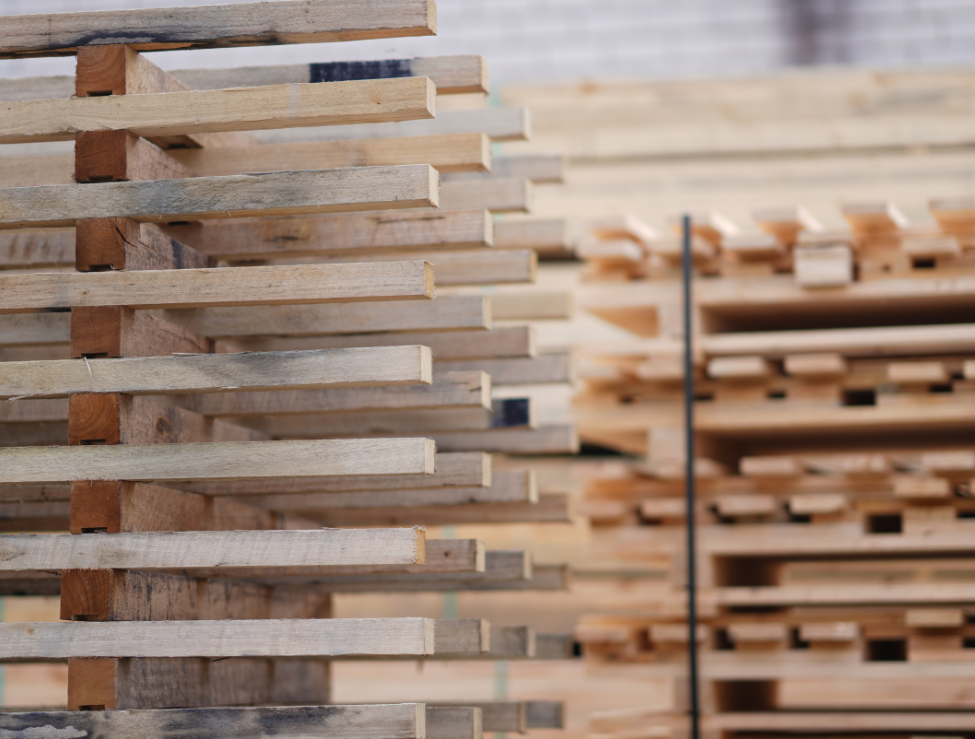
Key Benefits of Custom Pallets
Custom pallets are commonly used across manufacturing, construction, industrial supply, and export-driven businesses in NSW.
Size and Load Fit
Standard Pallets
Standard pallets work best when products are uniform and sized to match the pallet footprint. When products do not fit well, businesses often compensate with extra strapping, wrapping, or overhang, which can increase damage risk and handling time.
This is frequently seen in Western Sydney industries where products are long, dense, or irregularly shaped.
Custom Pallets
Custom pallets eliminate wasted space by matching the pallet size to the product. This improves stability and allows goods to be transported and stored more efficiently, particularly when truck space or container loading is a concern.
Load Capacity and Structural Strength
Standard pallets are designed for general loads and may not suit heavy, concentrated, or uneven weight distribution. Using a pallet that is not engineered for the load can lead to pallet failure and safety issues.
Custom pallets are engineered with specific timber sizes, bearer spacing, and deck configurations to handle the actual load. This is especially important for industries such as steel fabrication, masonry products, machinery, and construction materials.
Handling, Storage, and Workflow Efficiency
Standard pallets are easy to integrate into shared warehouses and third-party logistics operations due to their uniform design.
Custom pallets, however, can be optimised for how your operation actually works. This includes:
For high-throughput facilities in areas like Wetherill Park, these efficiencies can translate into real cost savings.
Cost: Short Term Versus Long Term
Standard pallets, particularly when rented through a pooling program, can appear cost-effective upfront. They work well for high-volume, fast-moving goods with low damage risk.
Custom pallets typically involve a higher initial investment but often reduce total operating costs by minimising product damage, improving transport efficiency, and extending pallet lifespan. For many businesses, this results in lower costs over time.
Export and Compliance in Australia
Exporting goods from Australia often requires pallets to meet ISPM 15 heat treatment standards. Not all standard pallets are suitable for export, particularly rental pallets that cannot leave the pooling network.
Custom pallets can be manufactured specifically for export compliance, ensuring smoother clearance at ports and reduced risk of delays.
Sustainability Considerations
Standard pallets are produced to a generic specification, which may not always be the most material-efficient option.
Custom pallets can be designed to use timber more efficiently while maintaining strength, reducing waste and supporting sustainability objectives without compromising performance.
Choosing the Right Pallet Solution
The decision between standard pallets and custom pallets depends on:
Why Pace Pallet Services?
Pace Pallet Services is a custom pallet manufacturer based in Western Sydney, servicing businesses across Sydney and NSW. We understand local transport conditions, warehouse constraints, and industry requirements, and we focus on practical pallet solutions that perform in real operating environments.
Whether you need standard pallets, custom pallets, or advice on improving your pallet strategy, our team is ready to help.
Get a Fast Quote Today
If you are looking to reduce damage, improve efficiency, or move away from one-size-fits-all pallet solutions, speak with Pace Pallet Services today.
Visit our Custom Pallets page or get in touch via our Contact page for a fast, no-obligation quote tailored to your business.

We never compromise on quality. Your product safety is our top priority. That is our assurance.

 02 9604 2700
 Previous Blog